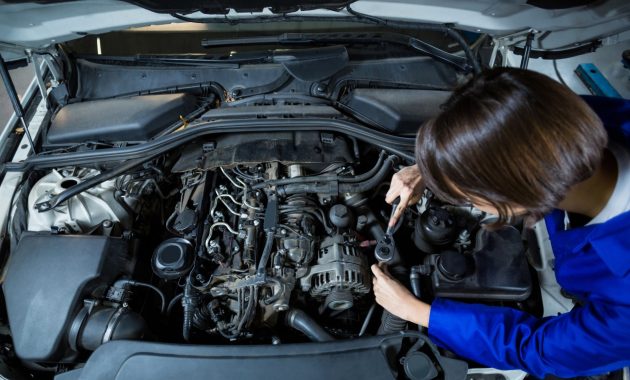
Today they headline spec sheets, pull hard from low revs, and sip fuel with care.
Car makers face strict emissions targets and rising costs. Three-cylinder engines answer both pressures with smart packaging, low mass, and real-world frugality. They now power crossovers, hatchbacks, and even sporty trims, helped by turbocharging and mild-hybrid tech.
Why three-cylinders are winning
Less metal means less friction and weight. A compact block warms up faster, so it spends more time in its cleanest operating window. Engineers also reduce parts count and machining time, trimming production costs without gutting performance.
Downsizing works when you add boost, precise fuel control, and clever timing. That trio turns a small unit into a flexible daily companion.
Firing order and crank design matter. A modern three-cylinder uses a 120° crank pin offset, firing evenly 1-2-3 across the cycle. That keeps torque delivery smooth enough for everyday use. To calm vibrations, most brands fit a small balance shaft and optimized engine mounts.
How efficiency happens
Turbocharging lifts torque at low rpm, so you shift earlier and burn less fuel. Direct injection cools the charge and sharpens combustion. Variable valve timing improves breathing across the rev range. In some models, a 48V mild-hybrid system gives a brief torque assist and stronger stop-start performance.
- Fast warm-up reduces cold-start emissions, a urban driving pain point.
- Fewer cylinders cut pumping and friction losses at cruise.
- Compact size frees space for crash structures and hybrid components.
- Lower development and production costs help keep prices in check.
The appeal isn’t only the lab numbers. Drivers notice easy pull in traffic, relaxed cruising, and lower fuel bills.
Our 3 stand-out engines
Ford Puma 1.0 EcoBoost (125 hp)
Ford’s 999 cc three-cylinder has become an industry benchmark. In the Puma crossover, the 125 hp tune pairs sprightly throttle response with light steering and a tidy chassis. The car reaches a quoted 191 km/h, which underlines how far these small units have come.
Ford’s calibration makes the difference. The turbo spools early, so the engine feels alert below 2,000 rpm. On many trims the system also pairs with mild-hybrid assistance, smoothing stop-start events and helping the turbo through brief gaps in boost.
Ford’s 1.0 EcoBoost shows why character matters. It feels eager in town and unbothered on a motorway run.
➡️ Why Duralex glasses are (almost) unbreakable: the science of a cult object that needs you
➡️ Psychologists reveal why emotional sensitivity is linked to deep cognitive processing
➡️ Hygiene after 65 : not once a day, not once a week, shower frequency that keeps you thriving
Noise and vibration stay in check once warm. At idle you sense a thrum rather than a rattle. Keep it in the mid-range and it balances pace and economy, which is where most owners spend their time.
Skoda Kamiq 1.0 TSI (95 or 116 hp)
Skoda deploys the 999 cc TSI in two outputs that suit different buyers. The 95 hp version targets calm urban use. The 116 hp variant stretches comfortably to motorway speeds, with a quoted 196 km/h top speed. Reported fuel use sits as low as 5.4 l/100 km, which is roughly mid-40s mpg US or just over 52 mpg UK.
The strength here is refinement. The TSI feels mature, with a linear torque build and an easy-going DSG or manual pairing. Skoda’s sound insulation and gearing let the engine settle into a quiet cruise, which reduces fatigue on longer trips.
The 1.0 TSI proves small can feel grown-up. It majors on smoothness, not theatrics.
Running costs stay friendly. Servicing is straightforward, and the engine’s popularity across the VW Group helps parts availability and long-term support.
Hyundai i20 1.0 T-GDi (100 hp, available with mild hybrid)
Hyundai’s 1.0-litre T‑GDi brings clear, usable torque and sharp throttle mapping in city and suburban driving. In 100 hp form it suits the i20’s light footprint and tidy suspension, making the car feel agile without working the engine hard.
The mild-hybrid option stands out. A compact 48V system lends a small boost when pulling away, restarts smoothly at junctions, and trims consumption during steady-state running. The effect isn’t dramatic, but it makes the drivetrain feel more elastic and saves fuel in stop-go traffic.
Pairing a three-cylinder with a 48V system adds polish: quicker restarts and a hint of extra shove when you need it.
The i20’s user-friendly gearing and clear instrumentation encourage efficient driving. Keep the engine in its sweet spot and it rewards a measured right foot.
What drivers notice on the road
Modern three-cylinders thrive on mid-range torque, not soaring revs. Short ratios get you moving. Longer top gears keep revs low on a dual carriageway. The best of the bunch mask their cylinder count with tidy calibration and noise control.
- In town: quick low-end response cuts gaps in traffic and reduces downshifts.
- On motorways: low revs at cruise help comfort and economy.
- On hills: turbo torque supports short bursts without screaming to the redline.
Key tech terms to know
Downsizing: building a smaller engine that matches the output of a larger one by using turbocharging and precise combustion control. Three-cylinders fit this brief by design.
Mild hybrid: a 48V system with a compact motor-generator. It doesn’t drive the car alone, but it supports the engine during launch and recovers energy while coasting or braking.
Buying tips and practical checks
Take a proper test drive. Warm the engine fully, then judge idle smoothness, low-rpm pull, and motorway refinement. A good three-cylinder should feel calm at 70 mph and pull cleanly from 1,500 to 2,000 rpm without harsh vibration.
Listen for knocks on cold start and check service history. Small turbo engines like fresh oil and regular filter changes. Give the turbo a moment to cool after a hard run. Inspect for clean stop-start operation in mild-hybrid versions and a healthy 12V battery, since poor voltage can blunt restart smoothness.
Where three-cylinders shine next
Strict Euro emissions rules keep nudging the market toward smaller, boosted units with clever electrification. Expect further gains from variable geometry turbines on petrol engines, improved particulate filters, and smarter thermal management that speeds warm-up in winter.
Drivers benefit in daily use. These engines feel light on their feet, cut fuel costs, and integrate neatly with compact crossovers and superminis. The Ford Puma 1.0 EcoBoost, Skoda Kamiq 1.0 TSI, and Hyundai i20 1.0 T‑GDi show three different ways to deliver that promise: one with playful tuning, one with polish, and one with hybrid finesse.