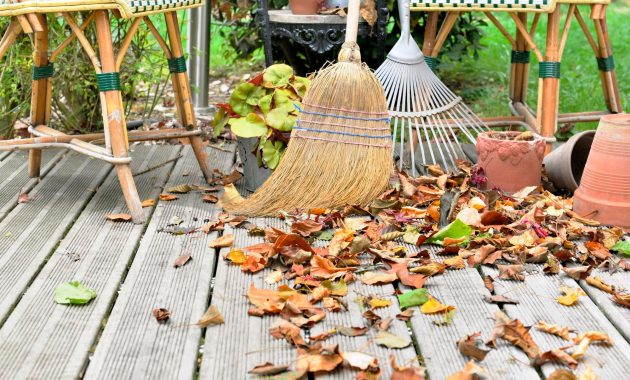
Yet dust, pollen and paw prints keep finding their way onto the slabs.
If daily sweeping feels endless, there’s a quieter route. A simple weekly routine, plus a few tweaks around the edges, can keep a patio looking cared-for with far less graft.
A routine that cuts the sweeping
The 10-minute formula many homeowners swear by
The approach is straightforward. Swap the constant broom work for a weekly rinse with diluted white vinegar, then push the water away with a wide floor squeegee. Light debris barely sticks during the week, so a quick midweek tidy takes minutes.
Strong week, light touch days: one diluted vinegar rinse and a squeegee pass can keep most patios guest-ready without daily sweeping.
Why it works is more chemistry than magic. The mild acidity loosens dusty films, hard-water marks and algae spores. The squeegee lifts that slurry off the surface rather than smearing it around. The result is less build-up between cleans and fewer heavy scrubs later.
Why white vinegar helps
The science in plain English
Household white vinegar is about 5% acetic acid. In low concentrations it disrupts the light biofilm that traps grime, and it changes surface pH just enough to make algae and mildew less keen to settle. It also softens mineral spots after rain, helping them wipe away without abrasion.
- Use ratio: 1 part vinegar to 10–15 parts water for routine care.
- Apply with a watering can and rose, a pump sprayer, or a soft-bristle outdoor broom.
- Work in shade. Heat dries the solution too fast and leaves marks.
- Squeegee towards a drain or flowerbed that can cope with mild acidity.
Dilute it well. You want a gentle conditioner for the surface, not a harsh strip that could etch sensitive stone.
What to do after rain or heavy use
Small habits that stop grime setting in
After a shower, run the squeegee once to move standing water off the slabs. That step alone prevents dusty rings and keeps joints drier, which discourages algae. If pets or kids track in soil, a two-minute pass with the squeegee or a soft broom deals with it before it bonds to the surface.
Make it work for UK patios
Match the method to the surface
Not all materials love acid. Some stones will react, which can dull or pit the finish. If you’re unsure, spot test a corner and wait 24 hours.
| Surface | Vinegar use | Better option | Notes |
|---|---|---|---|
| Concrete slabs / pressed paving | Yes, at 1:15 | Washing-up liquid in warm water | Rinse well near steel furniture to avoid corrosion. |
| Porcelain / vitrified tiles | Yes, mild | pH-neutral patio cleaner | Non-porous, so a squeegee shines here. |
| Sandstone / limestone / marble / travertine | No | pH-neutral stone soap | Acid can etch and dull the surface. |
| Composite decking | Sparingly | Mild detergent | Check the board maker’s guidance. |
| Timber decking | Avoid | Wood cleaner | Keep water moving to limit algae growth. |
Step-by-step weekly clean
Keep it quick and repeatable
- Dry pick-up: Brush off leaves and twigs. Two minutes, tops.
- Apply: Sprinkle diluted white vinegar across the surface.
- Agitate: Push a soft broom lightly to lift film and pollen.
- Dwell: Give it 5 minutes. Don’t let it dry.
- Squeegee: Pull the liquid to edges or a drain in long strokes.
- Final rinse: Optional on concrete; required near metal and plants.
The squeegee matters. A 45–55 cm head with a stiff, replaceable rubber blade clears more in fewer passes and leaves fewer streaks.
➡️ The “grandparent habit” that psychologists say creates the strongest bond with grandchildren
➡️ Say goodbye to gray hair with this 2 ingredient homemade dye
➡️ Not boiled, not dry: an 11?star chef’s trick for fast, ultra?crispy baked potatoes
➡️ Turkey goes toe-to-toe with France as it unveils the ideal partner for its next-gen Kaan fighter
Prevention beats daily effort
Small changes that keep dirt outside
Stopping grit at the edges reduces most of the problem. Use tough coir or rubber mats at doors. Sink a narrow strip of gravel where soil meets paving to catch splashback. Add a simple shoe brush or boot scraper by back doors. Prune overhanging shrubs that shed sap and seeds onto slabs.
- Joint care: Refill loose joints. Polymetric sand resists wash-out and slows weed growth.
- Drainage: Clear gullies and channel drains so water doesn’t pool and stain.
- Furniture feet: Fit caps to stop rust rings and scuffs on porcelain.
If vinegar doesn’t suit your stone
Alternatives that stay gentle
Where acid is a risk, use a pH-neutral patio cleaner or a bucket of warm water with a small squirt of washing-up liquid. For stubborn algae, oxygen-based cleaner (sodium percarbonate) breaks down into soda and oxygen, so it’s kinder to planting when used as directed. Always check the label against your material and nearby fish ponds.
Time and money saved
What it looks like across a season
A typical 20 m² patio needs about 8–10 litres of solution per weekly clean. At a 1:15 mix, that’s roughly 500 ml of white vinegar—around 25–35p if you buy in 5-litre bottles. The routine takes about 10 minutes. If you were sweeping for 8 minutes every day, you’re reclaiming close to 45 minutes a week during peak season.
Less scrubbing, less water, fewer harsh chemicals; the surface stays brighter because grime never gets a chance to root.
Common mistakes to avoid
Little errors that cause big streaks
- Working in full sun: dries the solution, leaves tide marks.
- Over-concentration: stronger isn’t better on porous or polished finishes.
- Skipping the pull: not using a squeegee lets dirt settle back into joints.
- Forgetting hardware: rinse railings and barbecue legs to protect metal.
Safety and environmental notes
Protect plants, paws and ponds
Vinegar is mild, yet it can scorch tender leaves. Wet nearby plants with clean water first, then keep runoff short and directed. Keep pets off the area until the patio is dry to avoid paw irritation and slip risks. Near fish ponds, stick to pH-neutral options and steer runoff away from the water.
Seasonal tweaks that pay off
Adjust for British weather swings
Spring: Increase frequency during pollen peaks; it binds to damp surfaces. Summer: Work early or late for better dwell time. Autumn: Clear leaf tannins quickly to prevent brown shadows. Winter: Use the squeegee to move meltwater and curb algae-friendly damp; skip vinegar in freezing conditions to avoid a skating rink.
Extra pointers that broaden the playbook
Sealants, stains and a simple test
A breathable, UV-stable sealer on porous paving can cut water ingress and shrink algae problems. Test first: pour a tablespoon of water on a clean slab. If it darkens within a minute, the stone is thirsty and may benefit from sealing. On porcelain, avoid topical sealers; they often streak and trap dirt.
If you’ve inherited historic stone, try a simulation in a low-traffic corner. Clean half with your chosen method and leave the other half as-is for a fortnight. Compare soil reattachment, drying time and slip underfoot. That quick trial tells you more than a label ever can and helps you set a routine you’ll actually keep.