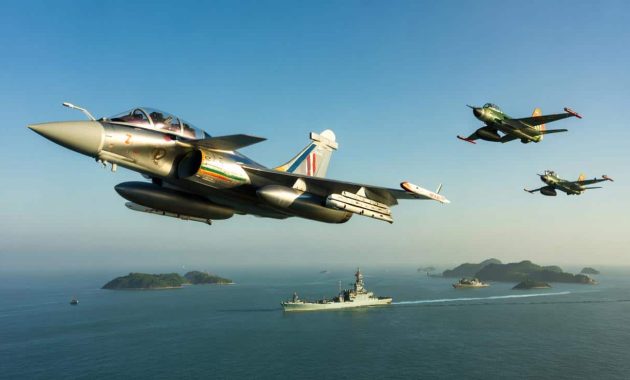
Behind closed doors, Vietnam is weighing a move that could reshape both its military and its foreign policy: a potential purchase of French Rafale fighter jets to break out of long-standing dependence on Russian hardware and support.
A fighter deal that looks like a technical divorce
For decades, Vietnam’s air power has rested on Russian-designed aircraft, Russian engines and Russian support contracts. From training to tools, almost everything runs through that single pipeline.
Sanctions on Moscow and the strain of the war in Ukraine have turned that dependence into a strategic liability. Supply chains are slower. Certain components are harder to secure. Each delayed delivery translates into aircraft stuck on the ground instead of on patrol.
Vietnam’s Rafale interest is less about speed and manoeuvrability than about breaking a supply-chain monopoly that limits its freedom of action.
French magazine L’Express recently reported that a Vietnamese pilot has already flown a Rafale, a privilege usually reserved for serious prospects, not casual window shopping. That flight hints at advanced talks and at a deeper question: who will guarantee Vietnam’s air readiness 10 or 20 years from now?
In modern air forces, the real metric is not the total number of jets on the books. It is the percentage that can take off fully armed, with reliable sensors and up-to-date software, at very short notice. Moving part of that capability into a Western ecosystem would mark a quiet but real divorce from exclusive Russian reliance.
Why Vietnam can’t rely on its Sukhois alone
On paper, Vietnam fields respectable combat power. Its Su-30MK2 multirole fighters form the backbone of the air force, and older Su-22 strike aircraft still fly attack missions. Yet the entire structure is rooted in Soviet-era concepts and Russian logistics.
That is becoming a harder fit for Vietnam’s main security challenge: defending its maritime interests in the South China Sea against a rising China. The airspace over the disputed waters is increasingly saturated with radar, surface-to-air missiles and electronic warfare systems.
Ageing platforms like the Su-22 struggle in that kind of environment. They may still fly, but their chances of surviving a mission near advanced air defences shrink every year. Keeping them just to show numbers risks maintaining “visible but vulnerable” assets that add little real deterrence.
➡️ What happens to your body when you walk just 20 minutes a day for one week
➡️ How adjusting meal timing slightly helps stabilize energy levels during darker months
➡️ Perfect chestnuts with no mess: the simple method street vendors use
➡️ The simple glass trick that keeps a bathroom smelling like a perfumery
The pressure is constant: maritime surveillance, contested reefs, fishing protection, offshore energy fields and busy trade routes. Aircraft in this setting must do more than fire weapons. They need to monitor, signal presence, escort ships and respond quickly to incidents at sea.
- Patrol and surveillance over exclusive economic zones
- Quick intercepts of unidentified or probing aircraft
- Show-the-flag flights over disputed islands and reefs
- Support for naval task groups far from shore
Western and US defence firms have been quietly courting Hanoi for years, offering radar, patrol aircraft and other systems. Against that backdrop, a Rafale option does not look like a sudden pivot. It fits a gradual diversification strategy already underway.
What the Rafale really brings: versatility and political endurance
The Rafale itself is a twin-engine multirole fighter capable of interception, deep strike, reconnaissance and anti-ship missions from the same airframe. For Vietnam, that versatility is central.
Rather than operate separate fleets for air defence, ground attack and sea control, one type of jet can switch roles according to the mission. A single sortie can launch with air-to-air missiles, precision-guided bombs and extra fuel tanks, then flex between missions as the situation changes.
This approach eases the logistics burden: fewer aircraft types, fewer unique spares, and a more coherent training pipeline for pilots and ground crews.
The Rafale’s value lies especially in its sensors and “fusion” of data. The jet combines radar, infrared search, electronic support and data links into a single tactical picture for the pilot, helping avoid ambushes and manage risk in heavily monitored airspace.
In contested skies, the key question is not “can it fly?” but “can it stay useful without being tracked and shot at too early?”
French fighters also come with a different sort of political insurance. A shift to Western equipment would put Vietnam within networks of European and, indirectly, US-compatible standards. That does not mean alignment with Washington, but it does unlock training, exercises and potential interoperability with a larger group of partners.
India and Indonesia show mixed fleets can work
Critics often argue that Vietnam is “too Russian” to change course. Yet India and Indonesia show that a mixed inventory is feasible if managed deliberately.
India has brought the Rafale into service while keeping a large fleet of Russian-origin aircraft, from Su-30MKIs to MiG-29s. The transition has been gradual, pairing new infrastructure and training with existing bases and doctrines.
Indonesia, facing its own maritime concerns and Chinese pressure, ordered 42 Rafales despite operating Russian Su-27/30 Flankers and older Western types. Jakarta’s choice signals that a non-aligned state can still opt for a high-end European fighter without formally entering any bloc.
Every Rafale export deal so far has come bundled with a wider ecosystem: simulators, long-term maintenance agreements, industrial participation and training partnerships. That long tail is precisely what makes the decision so strategic for a country like Vietnam.
The real price tag: ecosystem, not just airframes
A Rafale fleet is not a one-off purchase. It is a 30-year commitment to a maintenance culture, software update rhythm and munitions chain.
For Hanoi, bringing Rafales into service while keeping Russian aircraft would mean:
- Two sets of spare parts and test equipment
- Two training tracks for pilots and technicians
- Separate armament stocks with different standards
- Parallel software, mission-planning and data-link systems
This duality raises costs but also spreads risk. If sanctions, war or diplomatic friction disrupt one pipeline, the other can keep at least part of the air force operational.
There is also a doctrinal shift hidden inside the decision. Modern Western jets are designed around data: shared targeting, networked sensors and tight coordination with naval forces and ground-based air defences. Integrating Rafales would nudge Vietnam toward more network-centric operations, rather than pilots acting largely on their own cockpit sensors.
On the French side, production lines are already busy with orders from France, India, Greece, Croatia, the UAE and Indonesia. Any Vietnamese deal would need to fit into a tight delivery schedule, making timing and political will in Paris as critical as Hanoi’s interest.
Beijing, Moscow, Washington: what the choice would signal
Vietnam prides itself on “bamboo diplomacy”: flexible, pragmatic, never fully bending toward any one patron. A Rafale deal would test that balancing act.
In Beijing, the message would be blunt. A better-equipped Vietnamese air force, with advanced anti-ship missiles and improved sensors, increases the risks for Chinese ships and aircraft near contested areas. It would not flip the balance of power, but it would raise the cost of coercion.
For Russia, the signal would be painful. A historic client shifting even part of its combat fleet to French technology shows that Moscow can no longer guarantee the long-term sustainability of all the systems it has exported. Sanctions, war demands and industrial fatigue all take their toll.
Washington would read the move as another step toward de facto interoperability. Even without buying US jets, operating Rafales would bring Vietnam closer to NATO-style procedures and communications. That simplifies joint exercises and maritime coordination, especially as the US Navy steps up its presence in the region.
For France, a contract with Hanoi would reinforce its Indo-Pacific strategy, which leans heavily on arms exports, training missions and port calls to sustain influence far from Europe. Each Rafale sale extends French industrial and diplomatic reach for decades.
What we actually know – and what remains uncertain
As of early February 2026, there is no official Vietnamese order for Rafales. What exists is a pattern: French fighters stopping in Vietnam during an Indo-Pacific deployment in 2018, growing Western courtship of Hanoi, and now credible reports of test flights by Vietnamese pilots.
The unanswered questions are substantial:
| Issue | Key unknown | Implication |
| Fleet size | Starter batch of a dozen jets or a full squadron-plus? | Small buy signals testing the waters; larger buy suggests deep structural shift |
| Munitions mix | Air-to-air focus or full strike and anti-ship package? | Defines whether priority is air defence or maritime deterrence |
| Financing | Loans, phased payments, or mixed industrial offsets? | Determines how fast and how politically visible the shift becomes |
| Timing | Deliveries in late 2020s or pushed into 2030s? | Shapes how quickly Russian dependence can actually shrink |
Most such negotiations unfold quietly, because they intersect with sanctions regimes, export-control politics and regional sensitivities. Sudden leaks often mean the talks have reached a mature stage, or that one party is testing reactions at home and abroad.
Key concepts behind the Rafale choice
Logistics as a weapon
Recent wars, especially in Ukraine, have underlined a hard truth: logistics wins or loses campaigns. Fighter jets are complex systems that rely on thousands of parts, specialist tools and software updates. The country controlling that flow has leverage far beyond the initial sale.
For Vietnam, buying a Western fighter is not just about access to advanced missiles. It also means betting that France, backed by European industry, will remain a stable and predictable long-term partner. That calculation includes domestic politics in Paris, EU export rules and the health of the French defence industry.
Sovereignty through redundancy
At first glance, having both Russian and Western jets looks inefficient. Two standards, two training tracks, two sets of headaches. But redundancy can itself translate into sovereignty.
A state that can keep flying, even if one foreign supplier turns off the tap, has more room to say no when pressure mounts.
Vietnam’s leaders remember past conflicts where dependence on a single outside supplier sharply limited their options. A dual-sourced air force, while more expensive, could give them more room to manoeuvre in any future crisis with China or others.
One practical scenario often discussed by analysts: in a serious standoff at sea, Hanoi could keep its most modern, Western-equipped jets in reserve, letting older Russian aircraft conduct routine patrols. That layered posture would both signal restraint and retain a credible strike option in case the situation escalated.
Training and culture change
Switching to a cutting-edge Western platform would also reshape how Vietnamese pilots are trained and evaluated. Hours in simulators, mission planning with digital tools, advanced debriefings and constant software updates all impose a new rhythm.
Such change can bring benefits beyond combat aviation. Better joint planning with the navy, improved maritime surveillance practices and tighter integration of air defence networks often follow major fighter acquisitions. Over time, these shifts may matter as much as the jets themselves.