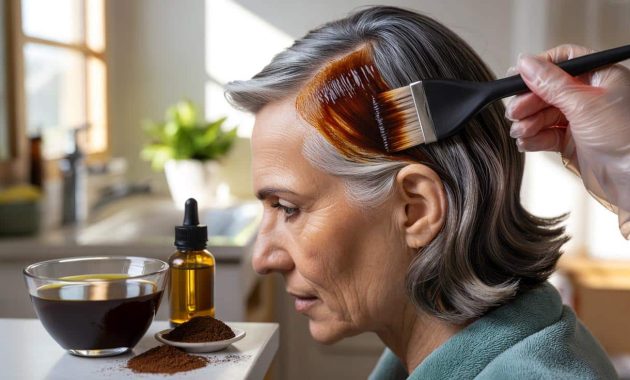
A simple kitchen routine is gaining ground: strong coffee blended with a plant oil, brushed through greys for a soft, brown veil. It sounds quaint. It also nudges real questions about optics, hair science, and where DIY care fits between acceptance and full-on colour.
What the coffee–oil mix can and cannot do
The brew relies on coffee’s dark pigments and an oil’s shine-boosting slip. Coffee leaves a light brown film on the cuticle. Oil smooths scales on the hair shaft, which changes how light bounces. Together, they make silver strands look less bright and the whole head appear a touch denser.
This is not a permanent dye. Expect a half-tone shift, not a full shade jump, and wash-out within a few shampoos.
Results vary. Salt-and-pepper brunettes usually see the biggest payoff. Very white hair gets a faint beige haze at best. Very light blondes may notice tea-like warmth, sometimes uneven. Porous lengths soak up more colour than new roots. The mix won’t neutralise unwanted tones the way professional formulas can.
- Most visible on: medium to dark brunettes with scattered greys
- Subtle on: steel-grey or fully white hair
- Risk of warmth on: light blonde, bleached, or highlighted hair
Why coffee tints and oil deepens
Roasted coffee carries melanoidins, the large brown molecules formed during the Maillard reaction, plus polyphenols like caffeic acid. These bind weakly to hair keratin, especially where the cuticle is rough or lifted. Coffee’s mildly acidic pH can help lay the cuticle flatter, which increases shine and makes hair look darker to the eye.
Oils change optics. They fill tiny gaps along the cuticle and reduce scatter, so the surface reflects more cleanly. Coconut oil has another perk. In a 2003 Journal of Cosmetic Science paper, researchers found it can reduce protein loss in hair during washing. That protects structure over time, which supports the look of fullness. Jojoba, argan and grapeseed act more as emollients and glossers than as penetrative oils.
Optics do heavy lifting here: a smoother surface reflects light in a way that reads as deeper, richer hair.
A note on caffeine
Caffeine gets headlines for potential follicle stimulation in lab settings. Rinsed off after minutes, it plays a bit part. The visual change mainly comes from pigment deposit and shine.
The at-home method, simplified
You need a very strong coffee and a light layer of oil. Keep the texture spreadable, not runny. Aim for even coverage and a gentle rinse.
➡️ Psychology says people who sleep in the same bed as their pets often have these 10 quiet strengths
➡️ How to fall asleep – science-backed tips for better rest
➡️ It’s called the Stairway to Paradise and it’s Italy’s most captivating walk (even in November)
➡️ Centenarian shares the daily habits behind her long life: “I refuse to end up in care”
➡️ To Raise Honest Children, Here Are The 3 Sentences To Repeat Every Day
- Ingredients: 150–200 ml cooled strong coffee (espresso or moka), 1–2 teaspoons plant oil
- Optional boosters: 1 teaspoon unsweetened cocoa for a deeper tone; a pinch of xanthan gum to thicken
- Tools: bowl, brush or gloved hands, shower cap, dark towel
On clean, towel-dried hair, apply from temples and partings outward, then through lengths. Cap it. Wait 10–20 minutes. Rinse well. If hair feels oily, use a mild shampoo once. Repeat weekly for maintenance. Expect light staining on pale towels the first time.
Choose the right oil
| Hair type | Suggested oil | Why it helps |
|---|---|---|
| Thick, coarse, porous | Coconut | Reduces protein loss and adds weight for smoother lie-down |
| Fine, easily weighed down | Jojoba | Light, scalp-friendly, less greasy finish |
| Normal to dry, frizz-prone | Argan | Balances gloss and softness, good frizz control |
| Oily roots, dry ends | Grapeseed | Very light feel, good spread, quick rinse |
Precautions and limits
- Patch test the liquid on the inner elbow for 24 hours if your scalp runs sensitive.
- Strand test on a hidden section if hair is very blonde, bleached, or highlighted.
- Use dark linens on day one to avoid marks. Coffee can stain cotton.
- Keep contact brief if hair is baby-fine. Shorter time and lighter oils reduce flattening.
- Do not expect grey coverage or tone correction. This is a soft-focus filter, not a corrective dye.
Cost, culture and why this is trending now
Rising prices have shifted beauty habits. Temporary tints and glosses are climbing because they are low-commitment and cheaper per use. Coffee also carries a feel-good angle. It repurposes waste. It smells nice. It turns a routine into a small ritual people can control at home. Brands have noticed, expanding “no-ammonia” and “deposit-only” lines. But the humble kitchen version thrives because it is almost free and easy to abandon.
Between full salon colour and doing nothing, coffee plus oil offers a reversible middle route with a modest, believable result.
Pros, cons and real-world expectations
- Pros: quick, low-cost, adds sheen, softens the clash between grey and darker strands, rinse-out safety net.
- Cons: inconsistent on very light hair, short-lived, can stain fabrics, no control over undertone, uneven on highly porous ends.
- Best for: brown bases with scattered greys, texture that benefits from light oiling, people who want a test drive before a gloss.
- Not ideal for: platinum blondes, heavy highlights, anyone seeking predictable, neutral ash results.
Alternatives and smart add-ons
Cocoa powder can warm the tone slightly without extra acidity. Strong black tea works similarly to coffee but often reads warmer and lighter. A deposit-only brunette gloss, chosen one half-shade softer than your base, delivers more evenness with less risk of orange. Tinted conditioners for brunettes can keep the effect going between coffee sessions.
Some mix a neutral plant powder mask with the coffee, such as cassia (often sold as “neutral henna”). This can beef up the cuticle’s feel and boost shine, while keeping colour minimal. Those curious about stronger botanicals might try a “gloss” of henna and indigo diluted heavily in conditioner. That route lasts longer and needs more care to avoid build-up at the hairline.
Useful extras for better outcomes
Check porosity before you start. Place a clean strand in a glass of water. If it sinks fast, porosity is high, and colour may grab on the ends. Apply less to lengths and more to roots in that case. If it floats, expect softer results, so give it the full 20 minutes.
Mind your shampoo. Clarifying formulas strip the film faster. If you want the tone to linger, switch to a gentle, sulfate-free wash for a few days. If you overdid the warmth, one clarifying wash usually resets the canvas.
On the health front, DIY coffee won’t reverse greying. That process sits with genetics, oxidative stress, and time. Lower stress and balanced nutrition support the scalp, but they rarely restore pigment. The value here lies in optics and care: better shine, a calmer contrast line, and a bit of self-styling that fits real life.